
Acalabrutinib is an anti-cancer medicine (tyrosine kinase inhibitor) showing promise in early studies. Its potential mechanism of action (MoA) is poorly understood. If understood better, more anti-cancer drugs can be rationalized against COVID-19. MoA elements include genes, and pathways that may explain the MoA of the drug in particularly ameliorating cytokine storm-related features in COVID-19. … Read More
COVID-19
Administration of vitamin D could help fight COVID-19
Vitamin D supplementation has been shown to protect against SARS-COV-2 infection, and could be particularly helpful for patients that exhibit shortage of vitamin D (e.g. seniors, immunocompromised patients) leading to complications such as cardiovascular comorbidities. This graph explains the mechanism of action of vitamin D in COVID-19 via key genes implicated. Explore the live graph.
Targeting the RAS system against COVID-19
There is growing amount of evidence to suggest the use of pharmaceuticals that target the Renin-Angiotensin System (e.g. angiotensin 1-7, ARBs and ACE inhibitors) may be beneficial in the treatment of COVID-19. This graph shows the interconnections among these classes of drugs, and SARS-CoV-2 via key genes implicated in this pathway. mediated. Explore the live … Read More
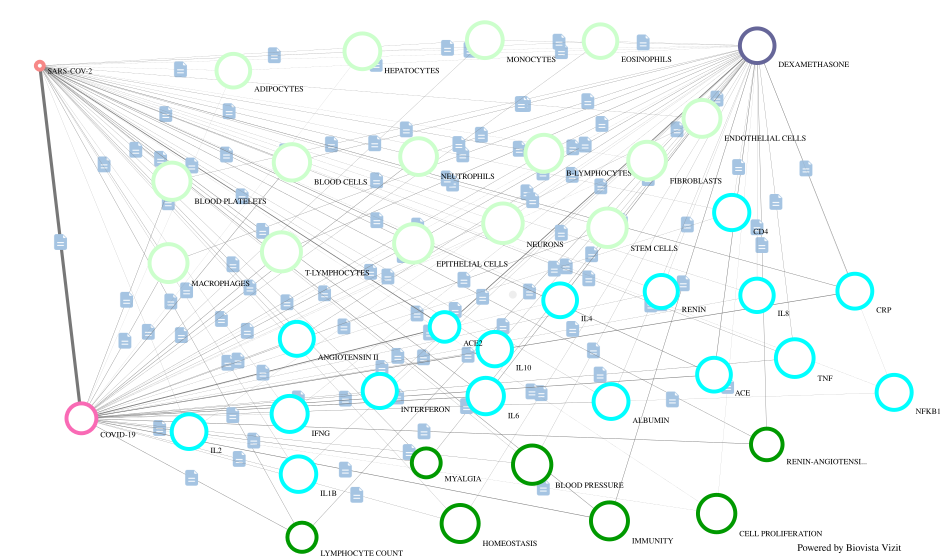
Dexamethasone mechanism of action analysis in the treatment of SARS-COV-2 induced infections
Dexamethasone is a widely-used and safe steroid that has been studied in the context of treating viral respiratory disorders, and is THE FIRST drug that has been shown to reduce mortality of patients with severe COVID-19. Explore the live graph.
Possibly implicated genes in SARS-CoV-2-mediated blood vessel disease
In addition to respiratory symptoms, novel findings have shown vascular complications in a series of patients with COVID-19, suggesting that COVID-19 is more to a respiratory infection caused by SARS-CoV-2. This graph illustrates some of the possible mechanisms (genes) by which these effects of SARS-CoV-2 may be mediated. Explore the live graph.